Knowledge Is Power:
Understanding My Deafness Through Genetic Testing
By Heidy Liz Nazario, Minnesota H&V
I didn’t officially learn I was deaf until I was around 17 years old, but the signs were there all along. The moment that changed everything for me was one day during high school. I was standing outside a classroom with a group of friends during a free period, laughing and talking. A teacher stepped out and asked us to quiet down because we were being too loud. One of my friends pointed at me and said, “It’s Heidy! She’s being so loud!”
I didn’t think I was being loud at all, but that moment stuck with me. I started reflecting on all the times I’d felt like I was missing something in class — moments when other students reacted to instructions or comments I hadn’t heard, or when I’d realize too late that I wasn’t following along. I wasn’t “distracted”; I just couldn’t always hear.
That realization led me to schedule a hearing test. Sitting in that sound booth, pressing a button when I thought I heard a beep, I had no idea how much that appointment would change my life. When the audiologist confirmed I had a hearing loss, I was overwhelmed with emotions but also relieved. There was finally an explanation for my confusing experiences.
Even after that diagnosis, though, doctors couldn’t tell me why I was deaf. I knew it ran in my family — my dad and several relatives also had hearing differences — but nobody could give it a name. I wanted that name, not because I thought something was wrong with me, but because I wanted clarity. I wanted to understand my own body, my family’s history, and what this might mean for my children one day.
Why I decided to get genetic testing
Years passed, and I carried that question with me. The desire for answers grew stronger when I became a mother. I wanted to be able to give my children knowledge I didn’t have when I was younger. I wanted to help them feel prepared, confident and informed about their own health, no matter what challenges they might face.
I also wanted to connect the dots for my family. So many of my relatives on my dad’s side have hearing differences, yet no one had a clear explanation. Testing wasn’t about fear or fixing anything; it was about honoring my family’s story. Getting tested felt like a way to show my daughters that curiosity is a strength, knowledge doesn’t take away from identity, and understanding your body is empowering.
Another source of inspiration came from a dear friend and mentor, Karen Putz. At conferences, Karen often spoke about the pros and cons of genetic testing, and about how important it is to be emotionally and mentally prepared for the results. She encouraged thoughtful reflection before pursuing testing, and her wisdom stayed with me. Her words reminded me that this journey isn’t just medical — it’s deeply personal, and it’s okay to approach it with both courage and caution. That encouragement helped me feel ready when the time came.
The process and the results
The process itself was simple. After discussing my family’s history with my care team, I provided a saliva sample that was sent to a specialized lab. Then came the hardest part: waiting. I thought about my father’s hearing difference, the family stories I’d heard over the years, and the connection between all of us.
When the results arrived, they gave me exactly what I was looking for: a name. The test revealed a variation in the ACTG1 gene, the likely cause of hearing differences across my dad’s side of the family. As I read more about this gene, everything began to make sense.
One of the known traits of ACTG1 variations is progressive hearing loss over time. This explained why myself and so many of my family members discovered we were deaf or hard of hearing later in life rather than in early childhood. Having that scientific connection gave me validation and understanding in a way I’d never experienced before.
The results also brought practical insight: this gene variation carries about a 50/50 chance of being passed on to future generations. This new information has been invaluable for me as a parent. I’ve already had my oldest daughter tested, and she does not carry the gene variant. Learning about my daughter’s genetic results brought knowledge about her hearing, but also a deeper appreciation for my own story. I haven’t yet tested my youngest daughter, but knowing this option is available gives me peace of mind.
Embracing my story
Genetic testing didn’t change who I am; I am, and always will be, proud to be deaf. What it gave me was understanding of my body, my family’s health history, and how I could share this knowledge with future generations.
In the end, this journey wasn’t just about science or health. It was about embracing my story fully — both the parts I live every day and the parts written into my DNA. Knowledge gave me confidence, not fear. It gave me tools to support myself and my children. And most importantly, it reminded me that every part of who I am, from my genes to my lived experiences, is something to be proud of.
Family Update – December 2025
Since writing this article, I learned that my youngest daughter carries the same ACTG1 gene variant that my family and I have. This means there is a significant possibility that she may experience progressive hearing loss at some point in her future.
This news brought many emotions, but it also reinforced why genetic testing was important to me. Knowledge allows our family to be prepared, to monitor her hearing, and have the tools to support her with love and understanding no matter what her journey looks like. ~
About the author:
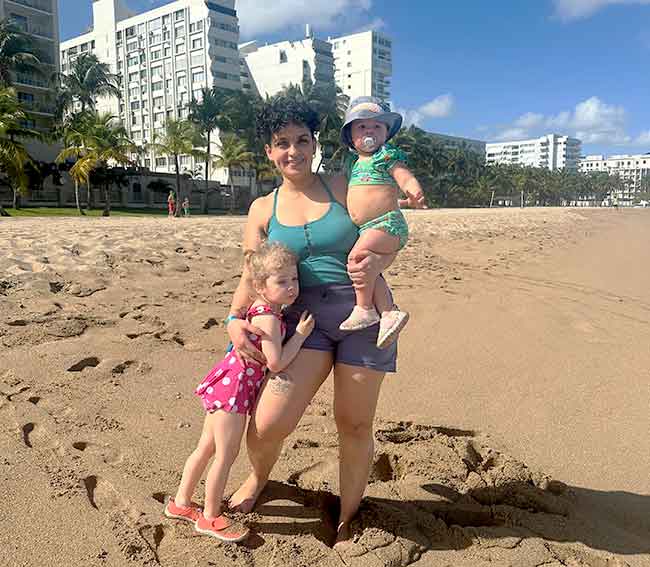
Heidy Liz Nazario is a deaf Latina woman living in Minneapolis, Minnesota with her husband, two daughters and dogs. She is Minnesota Hands & Voices’ Deaf and Hard of Hearing Guide Program Coordinator.
Read the Spanish version on the Spanish page of the H&V website.