Deaf/Hard of Hearing Perspectives
The Right Thing for Your Deaf Child
By Jennifer Stuessy, Sound for Light
Parents of Deaf children want to do the right thing for them. But with all the information out there, knowing what that “right” thing is for your child can be challenging. I’m a Deaf person – and this is what I want parents with a deaf child to know.
Sometimes parents with deaf children start off on one path and then change course along the way. How do parents decide? There’s something specific to look for.
I went to a college with a large Deaf population, so I ended up meeting a lot of my friends’ parents over the years, which is always fun. When I first meet them, there’s a little electricity when our eyes meet – a shared “familiarity” that binds us.
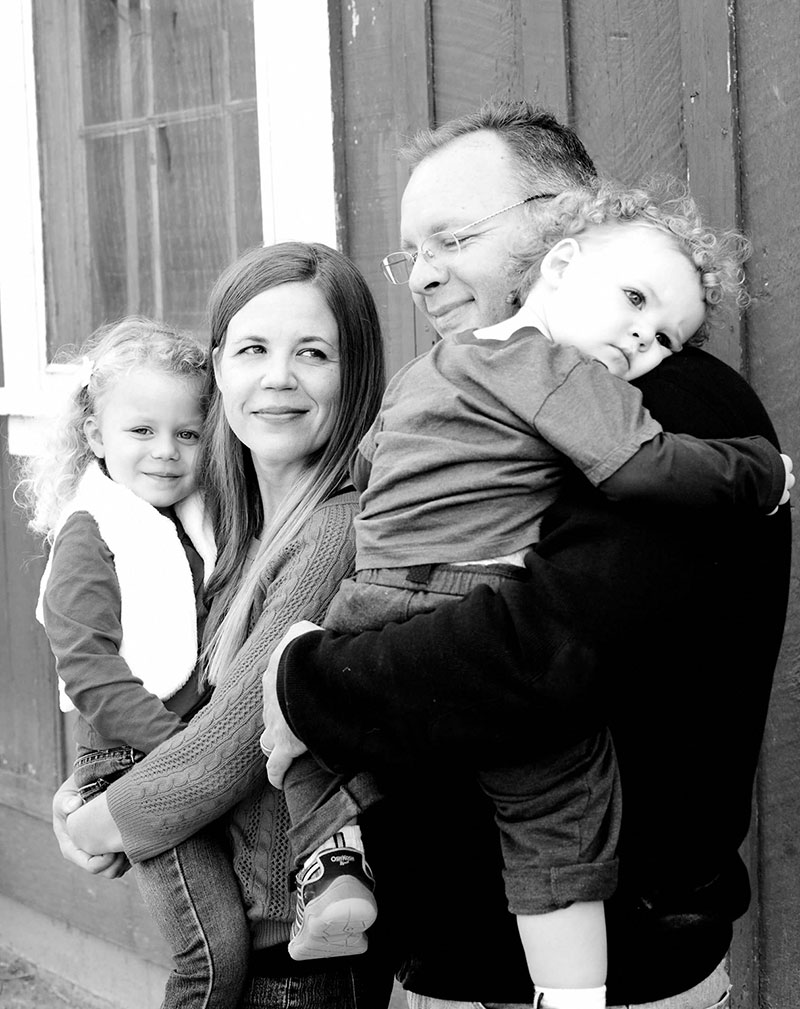
When I first met my father-in-law in 2009, I felt like I was meeting an old friend. That January, my then-fiancé and I traveled from our home in Los Angeles to Monroe, Wisconsin for a whirlwind weekend trip to meet him. Wisconsin in the wintertime is a pretty wild idea for a weekend destination, but since it would be the only opportunity to meet his parents before he came out for our June wedding in California, we jetted off to Chicago. Then, we got on a bus that took us to the Wisconsin border.
Our bus stop was located on an isolated road surrounded by a powder-white landscape and doubled as a gas station. Stepping off the bus, I could see his dad standing next to his truck, waiting for us. He greeted us by feigning surprise at our arrival. Chuckling, we climbed into the truck to drive back to their hometown.
I wonder if people from rural Wisconsin know how much they impress us warmer-city dwellers. What with their magic ability to drive stick-shift pickup trucks on icy roads in January, not to mention their attitudes. It’s downright casual. This and his dry humor at my husband’s expense made me giggle enough that I didn’t feel the need to white-knuckle the dashboard the whole ride into town. (He was a brave good driver.)
“Did you go to a Deaf school, too?”
Safe inside a diner, he sat across from us in a booth. He leaned toward me and asked if I had gone to a state Deaf school like my husband had.
“Uh no, I didn’t,” I guffawed. It wasn’t a big-headed statement, but indicative of how being clueless sucked for me. When I was in high school, I didn’t even know Deaf schools existed.
I guess I didn’t seem that deaf. But so many things, especially speech, were fuzzy or not heard at all. So, I always felt like I was kind of hanging on the edge of everything until I got to college, where I learned what full access was, hello.
So, I was salty. But he didn’t know that.
His face fell slightly as he said, “Oh…” and our attention turned to something else as it does when you’re visiting. That moment stayed with me ever since because I think he was really asking something else.
Did he do the right thing for his Deaf son?
My husband was born profoundly deaf. This only became known to his parents by about age 3-4. Once confirmed, they tried a couple of different educational approaches before realizing the Wisconsin School for the Deaf (WSD) would be a great place for him. The rub: the school was two hours away from where they lived and ran their family business.
They saw him thriving.
My husband’s parents learned about WSD from a Deaf summer camp he went to when he was nine years old. After some challenging social and academic experiences locally, he was attending the camp for the first time that year. There, they saw him interacting with Deaf peers for the first time. The challenges that were present in the other settings were gone. He was thriving. Although they struggled with the decision, ultimately, they made that leap of faith. I’m so glad they did.
The right thing for your Deaf child is not just ONE thing, it’s many. Deaf children should THRIVE.
You can see this by the light in their eyes and in how they move about the world and interact.
Deaf children should have firsthand ACCESS to the world around them.
In EVERY level of education, family, and social interactions. They shouldn’t feel like they wouldn’t be able to do something just because they are Deaf.
Deaf children should be able to communicate freely.
My own perspective is that all Deaf children have a right to learn and communicate in ASL. But as is the case with many families and it was the case with my own, I WAS actually communicating, so some kids will just be more naturally verbal. Just supplement that. If they are freely communicating, great! If not, be open to other supports to ensure that is happening. Include them.
Deaf children should have a social network.
This means having peers and friends – people to hang out with whom they aren’t necessarily related.
Deaf children should have pride in who they are.
Proud of and secure in their deafness, not ashamed. Expose them to Deaf role models.
As a hearing parent, check in with Deaf adults.
Meet Deaf Adults. What jobs do they have? What cool things are they doing?
Providing Deaf children with access is giving them keys to the world. Seeing them truly thrive as a result means you’ve done the right thing.
My father-in-law was a seeker by nature. It was his habit to connect, to learn, and to adapt. I began writing this in the fall of 2021 with the intention of dedicating it to my father-in-law, Lowell, on his January birthday, since it was our initial meeting that inspired it. Sadly, he passed away unexpectedly that December. So, instead, I shared it on the day of his memorial service, to honor his memory and also to share the story of his brave choices while earthside, with all my love and appreciation. ~
Editor’s note: The author blogs at Soundforlight.com, sharing a Deaf perspective on a wide range of topics, including popular culture.
H&V Communicator – Fall 2025