The 12 Key Rights Project
A Family-Friendly Early Intervention Resource
By Christine Griffin, Washington State H&V
What are the rights of families in early intervention?
The 12 Key Rights Project began with Washington State Hands & Voices and was developed through a PDSA improvement process led by the organization. What started as a simple flyer has grown into a meaningful, family-centered resource designed to support parents, caregivers, and providers working with children who are deaf or hard of hearing.
The project was created by a collaborative team that included Christine Griffin, Kerianne Christie, Jessie Phillips (a parent), and E. Renae Atalan. Together, they focused on making early intervention information easier for families to understand and use during what is often an overwhelming and emotional time.
At its foundation, the 12 Key Rights are based on national best-practice guidelines from the Joint Committee on Infant Hearing (JCIH). These guidelines describe what children who are deaf or hard of hearing and their families need during early intervention from birth to age three. While these standards are essential, they are often written in technical language that can be difficult for families to access and understand.
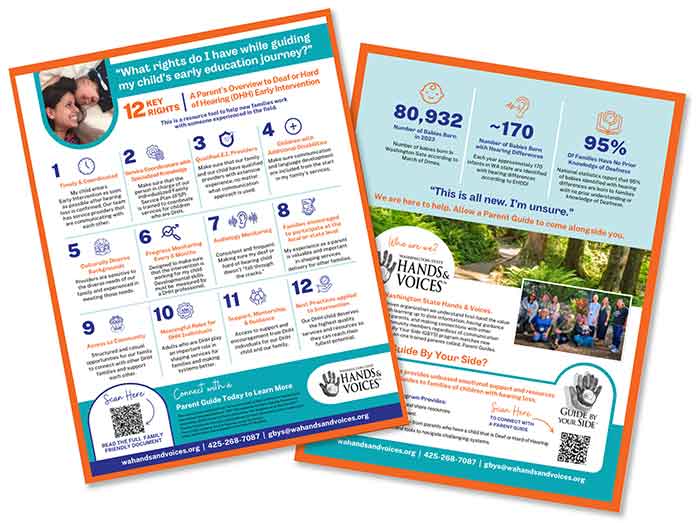
To bridge this gap, the team reworked the guidelines into “rights.” This shift in thinking to “rights” helps families clearly understand what they can expect, what they can ask for, and how they can actively participate in their child’s early intervention services. It also creates a shared language between families and providers, making conversations clearer and more collaborative.
Early childhood is a critical period for brain development, especially for language and communication. During this time, children learn at a rapid pace, and access to consistent communication—whether spoken, signed, or both—is essential. Early communication supports bonding, learning, and overall development, making timely and effective early intervention especially important.
Why This Project Was Created
Families often ask questions such as, “How will I know my child will be successful?” The 12 Key Rights Project was created to help respond to questions like this in a clear, supportive, and practical way.
When families first learn their child is deaf or hard of hearing, they often receive large amounts of information at once. This information can feel overwhelming, overly technical, or inconsistent across providers. In addition, families may struggle to find specialists who are experienced in supporting children who are deaf or hard of hearing.
The 12 Key Rights tool was designed to address these challenges by offering clear, simple information that families can use during real conversations with providers. Rather than being a document to read once and set aside, it is intended to support ongoing dialogue and shared understanding.
The tool was also reviewed and approved by the Washington State EHDDI Advisory Board, which helps guide early hearing detection and intervention efforts across the state.
The 12 Key Rights tool was designed to help families:
- Get a visual understanding of all of their rights in early intervention for their DHH child.
- Better understand their child’s early intervention services
- Feel more confident asking questions and sharing concerns
- Work in partnership with providers as part of a team
- Receive more consistent information across professionals
- Access the same quality of information regardless of where they live in Washington
- Overall, the tool is meant to support real conversations between families and providers and ensure everyone is working from the same understanding.
Improving the Tool Through Collaboration
After the first version of the tool was developed, it was shared with the Washington State EHDDI Advisory Group. Members provided feedback to help improve clarity, usability, and consistency.
Additional meetings were also held with leaders from Early Support for Infants and Toddlers programs. Together, they reviewed and refined the language to ensure it was accurate and easy to understand.
One key area of focus was Key Right 2: Service Coordinators with Specialized Knowledge. This right emphasizes that the person supporting a child’s Individualized Family Service Plan (IFSP) should have training and experience working with children who are deaf or hard of hearing. This helps ensure families receive informed, appropriate, and supportive coordination of services.
Trying the Tool in Real Life
A three-month pilot of the tool was conducted from October to January. During this time, providers—including audiologists, early intervention specialists, and DHH professionals—used the tool during visits with families.
Families volunteered to participate, and providers were given a support packet to guide conversations. They also received ongoing support to help ensure the tool was used consistently and effectively.
After each visit, both families and providers completed brief surveys to share their experiences and feedback.
What We Learned
The results of the pilot were very positive.
Families and providers reported that:
- Conversations felt more meaningful and engaging
- Providers felt more confident using the tool
- Families had a clearer understanding of their rights
- It was easier to discuss advocacy and next steps
- The tool felt less overwhelming than traditional materials
- The information was clear, simple, and easy to use
In addition, families shared that they felt more included in the EI process. Providers noted that the tool helped structure conversations over time and made it easier to explain complex ideas in a clear way.
Kerianne Christie noted “When we developed this and took data on the process, the findings were clear.” “We want this information in the hands of families – early, clearly, and in language that affirms their role as decision-makers in their child’s journey,” said Christine Griffin.
Early results show that the tool improves communication, increases confidence, and helps families better understand their rights and options. While continued work is needed to expand and refine its use, this project represents an important step toward making early intervention more accessible, consistent, and family-centered across Washington State.
Moving Forward
The project is now entering its next phase, which includes sharing results with statewide advisory groups, expanding use of the tool across early intervention programs in Washington, providing training and support for providers, and integrating the tool into everyday early intervention practice. The 12 Key Rights is also available in both English and Spanish to ensure more families can access and benefit from it.
Families and providers can find PDF copies of the 12 Key Rights flyer and supporting documents on the Washington State Hands & Voices website:
wahandsandvoices.org/guide-by-your-side-program/
The 12 Key Rights Project was created to help families feel more informed, supported, and confident during early intervention. By turning complex guidelines into clear, family-friendly language, it makes it easier for families and providers to talk, plan, and make decisions together. ~
H&V Communicator – Summer 2026 – Digital Issue