Journey to Jordan with My DHH Children
By Najwa Ghattas, Arizona H&V
This past June, I traveled to Jordan with my children—a dream trip in the works for years. My husband planned this trip for his 50th birthday to show his kids where he grew up. He wanted them to experience the culture, the traditions, the life he loved as a kid. While I never lived there, I had visited family in the past and was so excited for them to meet cousins they never knew they had. The trip was filled with everything we wanted, plus some unexpected reflections.
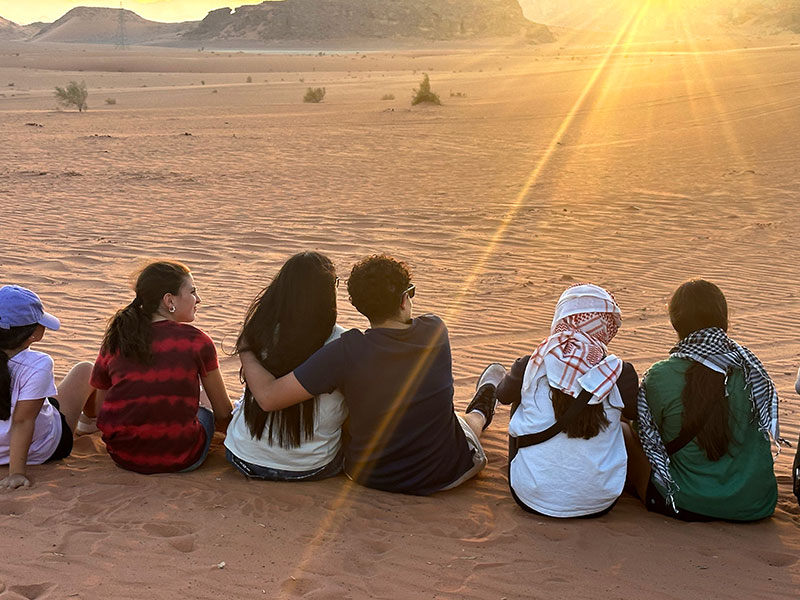
My two youngest children are deaf and use cochlear implants. As a family, we’ve learned to adapt, advocate, and support one another across various settings. But international travel, especially to a place as culturally rich and historically layered as Jordan, brought new insights and challenges that did not occur to me before the plane took off.
Jordan was AMAZING! The country welcomed us with warmth—family gatherings, rich traditions, breathtaking landscapes, the kindest people in the world, the delicious food, and so much history. Amid the joy, my children—especially my younger two—struggled. The Arabic spoken around them was more than just a foreign language; it was a source of frustration. This is a culture that should be theirs by heritage, but it felt distant to them. They felt disconnected. They looked at us and said, “We wish we had learned Arabic growing up.” This statement affected me in a totally surprising way. I noticed the cultural barrier at home, but never really thought much about it. We always immersed the kids in Middle Eastern traditions with our family dinners, holidays, and family parties, but they’ve never truly understood the language.
Back home, it wasn’t as noticeable surrounded by their American-speaking cousins. But in Jordan, where the language and culture are everywhere, I realized how deep the gap was.
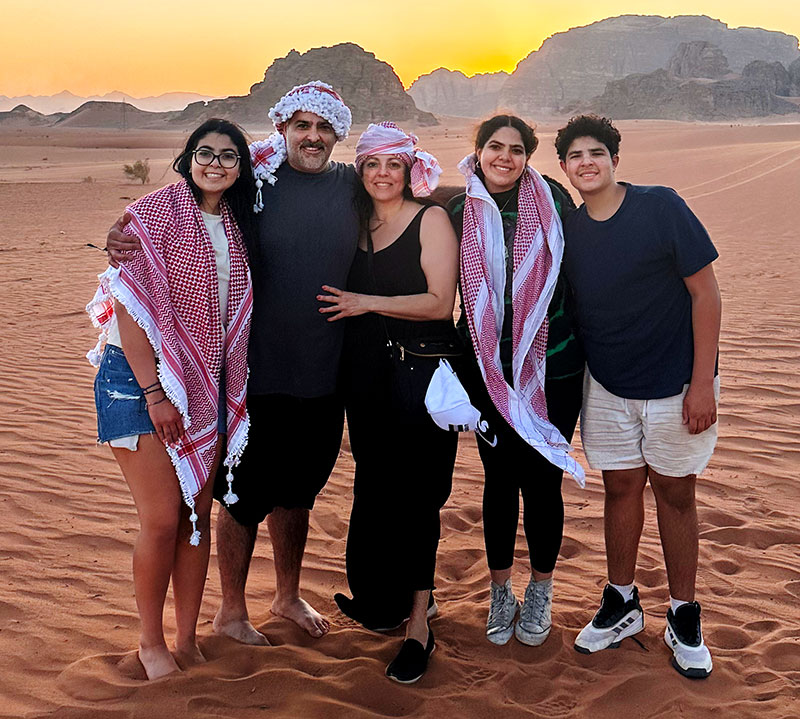
Years ago, like many families raising children who are Deaf/Hard of hearing (DHH), we were given a clear recommendation: focus on one language—English—for consistency, for clarity, for ease. That’s what we did. We put our energy into speech therapy, auditory training, and education in English. At the time, it felt like the right choice—something that would give our kids the strongest foundation.
But in hindsight, we see what we lost along the way: the chance for our children to grow up multilingual, to feel rooted in two worlds where they could feel comfortable. We actually started out intending to have one parent speak English and the other Arabic, hoping our kids would grow up bilingual. That idea slowly faded as we prioritized what we thought would help our kids thrive.
As for sign language—we didn’t use it much early on. It wasn’t discouraged exactly, but it wasn’t emphasized either. We were steered toward spoken language development, and like many parents navigating unfamiliar territory, we followed the advice given. Only later did we begin to understand that sign language could have been a bridge, not a barrier.
Their frustration in Jordan wasn’t just about communication—it was about connection. They saw their cousins chatting, their grandparents laughing, everything in a language they could not understand. That moment of disconnect became a powerful lesson—for them and for us.
A fellow Hands & Voices mom gave me the idea to write this after returning from my trip. It did not occur to me that this could be something to share with others. However, writing our experience prompted me to reflect deeply and to realize my feelings of regret.
Family Leaders Supporting New Families from Diverse Cultures
If I had something to share with families raising DHH children: give them every opportunity. This is such an important space to hold for new families. Encourage families to expose children to all the languages that form their identity, including signed languages and heritage languages. Let them be the ones to choose what resonates. Multilingualism may look different for DHH children, but it is possible. And more than that—it’s valuable. I wish I had this to do over again!
It’s okay for families to have questions, and they should be encouraged to ask them. Encourage them to talk openly with their early interventionists, not just about language goals, but about family values, cultural identity, and what they want for their child’s future. Connect them with other multilingual families who’ve navigated similar decisions. Sometimes, just knowing they’re not alone can give a family more confidence.
Many families raising DHH children are told early on to focus on just one language, English, the language of school. The reasoning often centers on clarity and simplicity, but this advice can unintentionally lead families to distance themselves from their home languages and cultural identities.
Also, consider sharing some of the emerging research around multilingualism and DHH children. Children can draw on all of their language experiences to make meaning—it’s not about choosing one language but building bridges across all the languages they’re exposed to.
Most of all, remind families that language is not just a tool for communication, connection, identity, and belonging. Their home language matters, and their child deserves access to every part of who they are.
Change of Travel Plans
Traveling to Jordan reminded us of the importance of staying connected to culture, to roots, and to the language of our ancestors. But more importantly, it reminded us that identity is multifaceted, and our children deserve every tool to explore and claim it. This trip sparked new conversations at home—about bringing more Arabic into our daily lives, maybe seeking out Deaf role models from similar backgrounds, and creating more intentional ways to connect to our heritage. Yes, navigating international travel with DHH children takes planning—accessibility, technology, and flexibility—but for us, it led to a deeper understanding of where they come from and a renewed commitment to where they’re going. We came home with more than memories—we came back with direction. That direction means raising them with fuller access to both their languages and cultures, not choosing one over the other but embracing both. It means they belong in every space they navigate and giving them the tools to move through the world with pride in all parts of who they are. ~