Foster Care and Fostering Joy
By Anna Crenshaw, Iowa H&V
I’ve known for a while that I didn’t want to have my own biological children. As a Teacher of the Deaf and Hard of Hearing (TDHH), throughout my career I have witnessed so many children in need of a language-rich environment and a home where communication is fully accessible.
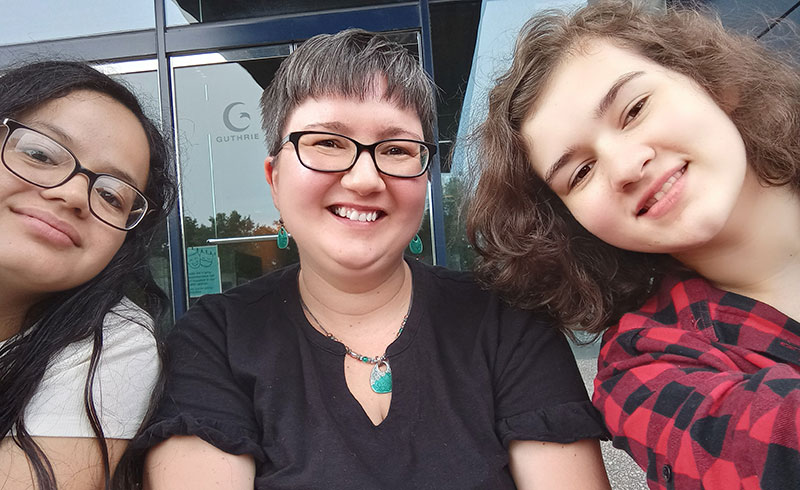
My journey to foster care isn’t unique, but the skills that I use and the children that I raise are. My first foster (Deaf) was one of my first students. My second foster (hard of hearing) was also a former student. I currently have a foster placement and have another former student who might be in need of a home when this placement ends.
I seem to have found a niche: few foster parents want to foster teen girls. There are even fewer who are capable of fostering teens who are D/HH. Most people know the basics of the negative parts of foster care. Yes, most of these youths come from traumatic situations with their own trauma. They’ve missed school and can have special needs that have never been addressed. They don’t know who to trust, so they act out and are defiant. They haven’t had consistency, and it’s a challenge to bring them into a home with established rules and routines.
Now, let’s add a hearing difference to that list. They may only be able to communicate in ASL, which most foster parents aren’t fluent in. They may be used to being extremely independent because they’ve had no way to communicate their needs. They may not have language at all. They may have hearing equipment that makes people nervous to touch it, and maybe that equipment is broken. All of this doesn’t exactly put them at the top of the list of “desirable youth” to foster.
Most foster youth struggle in the system; being D/HH is even more challenging. When people are asked if they might consider becoming a foster parent, they generally say something along the lines of, “Oh yes, those people are amazing, but I could never be one. It would be too much for our family.” I’ll admit, I had my doubts too! I’m happily single, so there is no one else with whom to share the load. I’m a teacher (TDHH), so I’m obviously not rich. I live frugally. I am located two hours away from any family members. I already have a lot on my plate with my mentally taxing job and volunteer work.
I had to start thinking of what I do have that would benefit youth in need of a home.
- Fluency in ASL.
- Years of experience advocating for my students in IEP meetings.
- Years of writing IEPs and 504s as well as partnering with various schools and their staff. Knowledge of the developmental needs of all ages and special needs.
- Hands-on familiarity with many types of hearing equipment.
- A calm nature without a hot temper.
- A work family of colleagues that I can call on for support.
I have a lot of skills and knowledge that many parents wish they had. I also have joy to be shared.
I’m not going to tell you that it’s been a fairy tale. It’s been frustrating, expensive, tiring, complicated, and many other difficult things. It’s also been rewarding, memorable, instructive, fun, and many other positive things. You don’t have to be the perfect parent or have the perfect life to consider being a foster parent. You can take the initiative to learn more and decide as you go if you want to take the next step. If you’ve read this whole story, I hope that you’ll consider opening up your home to make a difference in some lives by quite literally “Fostering Joy.” ~
Learn more about fostering: https://www.fosteruskids.org/faq/how-do-i-become-a-foster-parent-in-the-us